
About the story
| Length | 58 minutes, then about three minutes of the story’s own sounds |
|---|---|
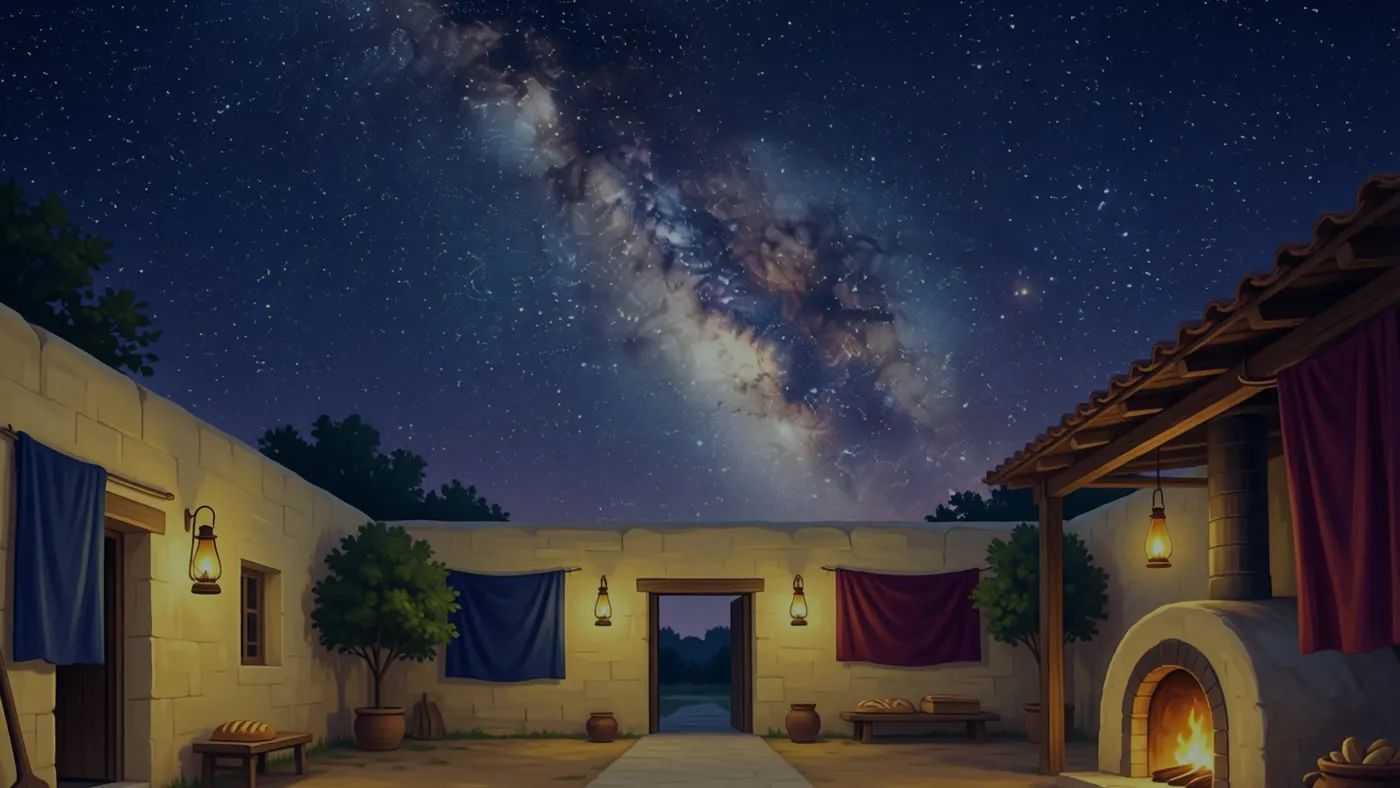
| Where | The caravanserai at Anjir, a square stone inn with a courtyard, a fountain and a fig tree, on the old salt road between the flats and the hill towns |
| When | Late spring. Late afternoon into a warm, clear, star-filled night. |
| Weather | Hot and dry by day, still and mild by night, with a light wind off the plain after dark |
| In Lalai | Included with a subscription, and in the 7 free nights for new subscribers |
Like every Lalai story, it is read slowly in a low voice, over a painted scene that moves softly and dims as the story goes on. Nothing goes wrong and nobody is in a hurry, so there is nothing to follow and nothing to remember.
Who is in it
- Sami The keeper of the caravanserai, about seventy. Forty years of filling the same lamps, in no hurry whatsoever.
- Nura His granddaughter, eight years old, who carries the tea tray and counts everything twice.
- Pepper A small grey donkey travelling with the caravan, fond of having her ears rubbed.
How the hour goes
The story moves through five parts. Each is a little slower and quieter than the one before, and the last drifts off with long rests and no goodbye.
- 0–7 min The Long Light
- 7–24 min Twelve Lamps
- 24–43 min The Courtyard at Night
- 43–52 min The Roof
- 52–58 min Drift
The sounds under the voice
Real recordings play under the words, and you choose the balance: more voice, more ambience or even. When the story ends, its sounds can carry on for a few minutes, half an hour or all night.
- A small stone fountain running into its basin in the courtyard
- A fire of dry wood settling to embers
- Warm night insects of the dry country
Read the opening
The first 1000 words, exactly as they are read. The story goes on for about 49 minutes more.
There is a road that goes across a wide dry plain, from the salt flats in the south to the hill towns in the north, and it has been there so long that nobody remembers anybody making it. It is a pale road across pale ground, with low blue hills along one side of the sky and nothing much along the other. In the late afternoon the whole plain turns the colour of a lion, and the light lies along everything like honey poured slowly out of a jar.
Halfway along that road, where a spring comes up out of the rock, there is a caravanserai: an old square building of yellow stone, with high blank walls on the outside and one arched gate, tall enough to let in a camel with its load still on. Inside the walls there is a courtyard, open to the sky, with twelve arches running round it, and a fig tree in one corner, and in the middle a low stone basin with water running into it, quietly, day and night, from a pipe in the wall.
The place is called Anjir, which is a word for fig, after the tree. The man who keeps it is named Sami. He is about seventy, thin and brown, with white stubble and a flat grey cap, and he has kept the caravanserai for forty years, as his father kept it before him. This is the story of one evening at the end of a warm spring, which was, as far as Sami could tell, exactly like four hundred evenings before it, and just as good.
The heat had gone out of the day by the middle of the afternoon. It did not leave all at once. It softened, and thinned, and drew back, until what was left was only warmth, the kind that is pleasant on the arms, and the shadow of the west wall came out across the courtyard stones a hand's breadth at a time, and the swallows came down out of the high air and began to turn in circles over the yard, low and fast and silent.
The stones of the courtyard had been in the sun since the morning and they held it. They would go on holding it half the night, giving it back slowly, so that anybody sitting down on them at midnight would find them still faintly warm, like the side of a loaf an hour out of the oven. Sami went barefoot over them in the evening for exactly that reason, and had done for forty years, and considered it one of the better things about the job.
His granddaughter Nura was eight that spring, and she was there for the season, and she had taken charge of counting. She counted the arches, which were twelve. She counted the lamps, which were also twelve, one for each arch. She counted the steps up to the roof, which were nineteen, and the tea glasses, which were twenty-six, and then she counted all of them again in the evening in case any of them had changed, and they never had, and she seemed to find this satisfying rather than otherwise.
There was also a cat, a yellow one, thin and dusty, with a bent ear. The cat had arrived by herself some years before and had made no arrangement with anybody. She spent the hot part of the day lying flat under the fig tree in the deepest shade she could find, and the cool part of the evening sitting upright by the fire with her tail wrapped round her feet, and she was, in her way, in charge of the place.
From the gate the road could be seen for a long way in both directions, going out straight and pale and empty, with little spirals of dust walking slowly along it where the air turned. Far off to the south, at the edge of everything, there was a low white glimmer where the salt lake lay, and on a clear evening it took the last of the light and held it, so that the horizon down there stayed bright long after the plain had gone the colour of an old coin.
And the evening had its smells, which came up in a particular order, and Sami knew all of them. First the dust settling, which smells faintly of warm stone and old rain. Then the fig leaves, which give off their green, milky scent as soon as the sun is off them. Then the water in the basin, cold and clean and mineral. Then the mint growing in a cracked pot by the step. And then, before long, the smoke of the fire, and after the smoke, the bread.
There were four things to be done before dark, and they were the same four things as always: the water drawn, the trees watered, the lamps filled and lit, and the bread baked, in case the road brought anybody. Whether it brought anybody or not was the road's business. The bread was baked regardless. And after those four things there was nothing at all left to do until morning, which was, in Sami's opinion, the whole point of doing them.
He began with the water. The well stood in the corner of the courtyard under a stone arch, with a wooden roller above it worn smooth and shiny in the middle where the rope had run for two hundred years. He let the bucket down slowly, hand over hand, and the rope turned the roller, and the roller made a low, round, wooden creak that went up the walls and came back off them, and far below there was a small soft knock as the bucket met the water and tipped and filled.
He drew it up the same way, without hurrying, and the water came into the light cold and grey-green and shivering, and he tipped it into the stone channel that ran along the wall. The channel took it round the courtyard and let it fall the last little way into the basin, and the falling water made its three notes, the same three it had made all day and would make all night: a low one, and a higher one, and one in between.
Listen tonight, free for 7 nights. New subscribers get seven nights free, then $24 a year or $3 a month. The Night Train is free for good. Lalai has no ads, no account and no analytics.

From After Hours
More sleep stories
-
 Free
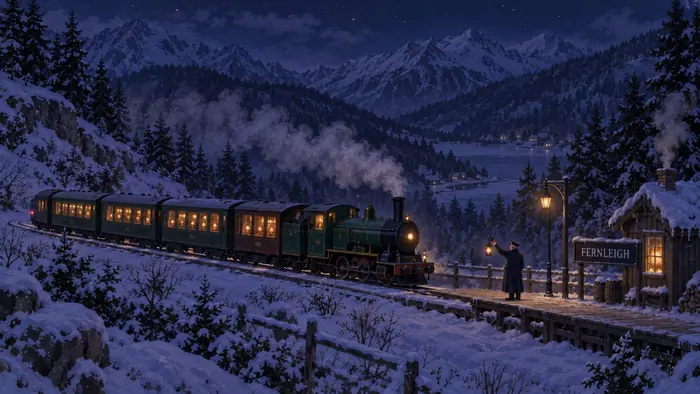
The Night Train Through the Snow
A small, slow steam train climbs all night through snowy mountain forests, and the conductor turns the lamps down carriage by carriage as the passengers fall asleep.
-
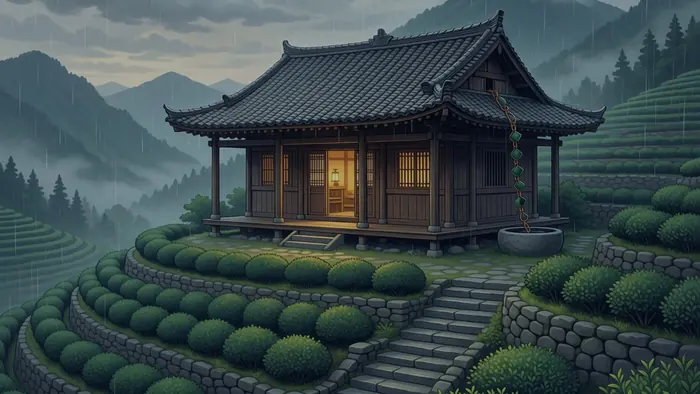 The Tea House in the Rain
High on a mountain in the rainy season, a woman washes the cups, checks each tea tin and watches the clouds come down the copper rain chain.
-
 The Observatory on Mallow Hill
Hazel opens the dome above a sleeping village, shares soup and Saturn with the baker’s grandson, and closes up as the first snow drifts in.
-
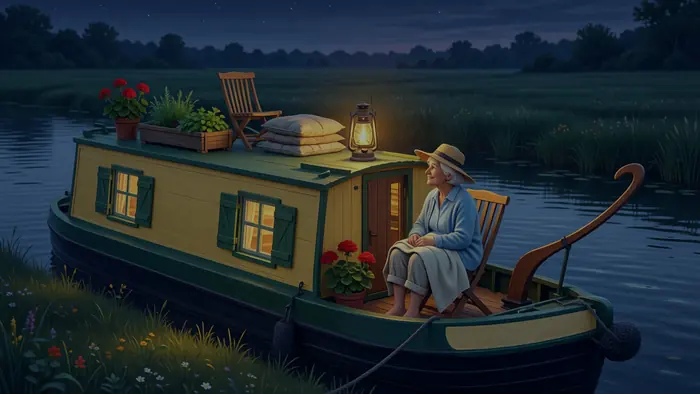 The Houseboat on the Slow River
Down a wide, slow river, gently through an old lock, past meadows and a mill, to moor beneath an oak while glow-worms light the bank.
-
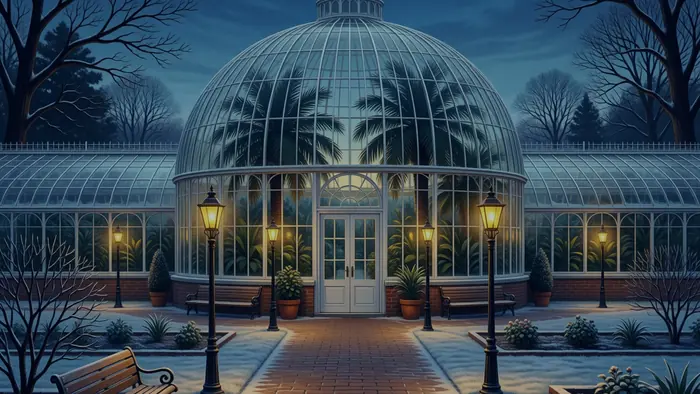 The Winter Glasshouse
Watering bench by bench, banking the boiler, counting the sleeping plants, while snow falls on the glass overhead and turns, late on, to soft rain.
-
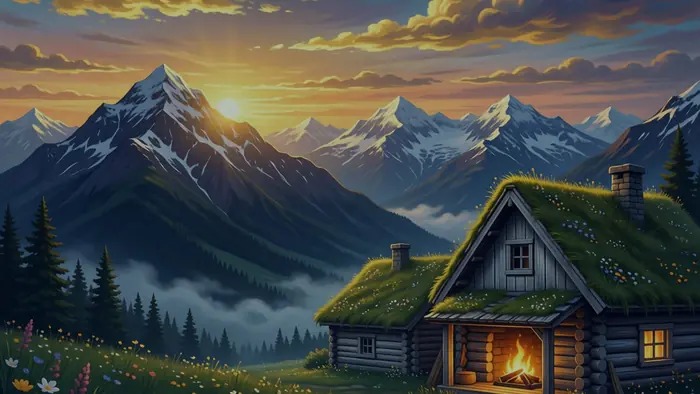 The Summer Farm on Bell Mountain
Eight cows brought in and milked by hand, whey stirred over a slow fire, and a box bed under a turf roof with the brook running past the door.