
About the story
| Length | 55 minutes, then about three minutes of the story’s own sounds |
|---|---|
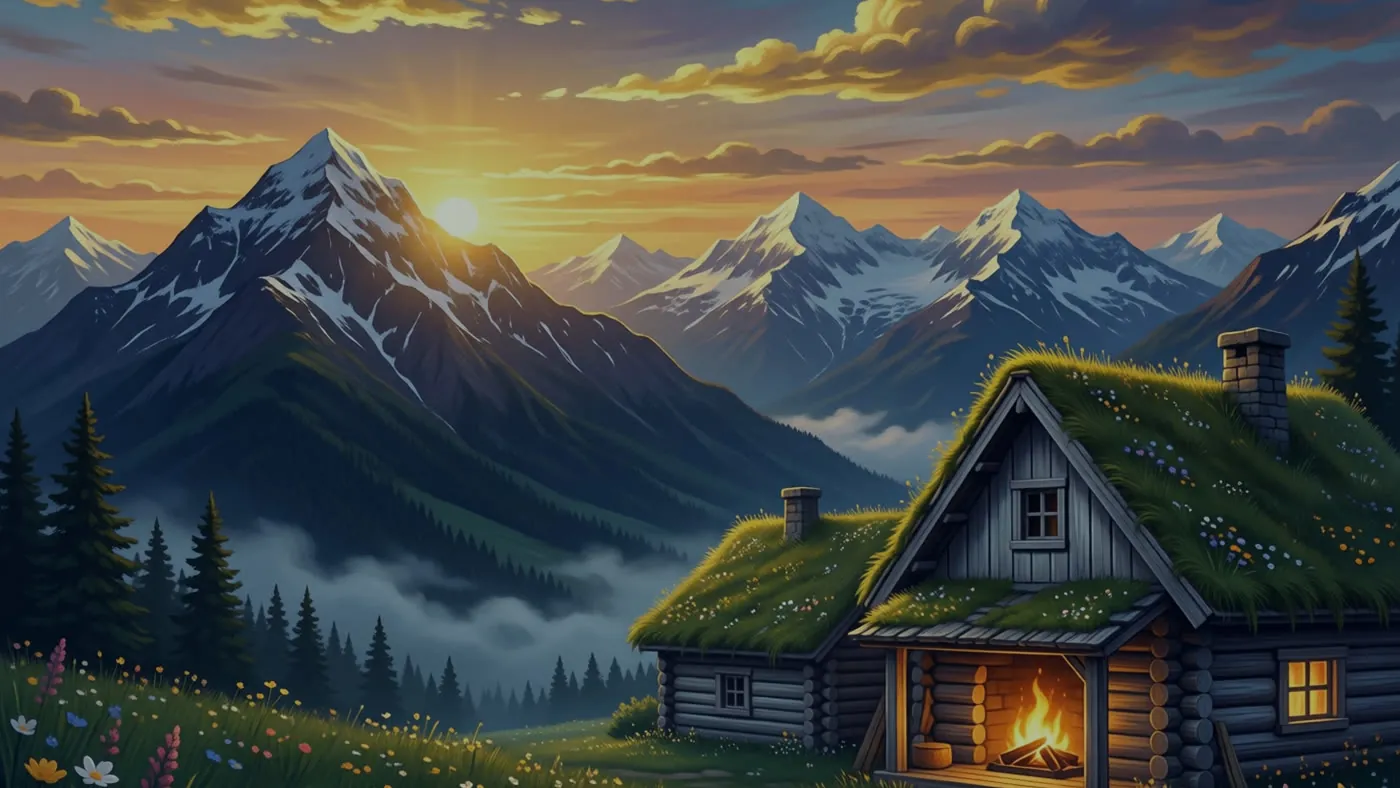
| Where | A summer farm of three small turf-roofed buildings on a shelf of mountain pasture, high above a long northern valley, with a brook running through it |
| When | High summer, the middle of July. A long golden evening that never quite becomes night. |
| Weather | Clear, mild and still, with cold air sliding down off the snow patches after midnight and mist gathering in the valley below |
| In Lalai | Included with a subscription, and in the 7 free nights for new subscribers |
Like every Lalai story, it is read slowly in a low voice, over a painted scene that moves softly and dims as the story goes on. Nothing goes wrong and nobody is in a hurry, so there is nothing to follow and nothing to remember.
Who is in it
- Marit About sixty, up on the mountain with the cows every summer since she was nine. Calm, capable, and very fond of all eight of them.
- Jonas Her grandson, fourteen, up for his third summer. Carries water, splits wood, whittles, and falls asleep by the hearth most evenings.
- Bram An old black and white dog who walks the cows home and then lies across the doorway for the rest of the night.
How the hour goes
The story moves through five parts. Each is a little slower and quieter than the one before, and the last drifts off with long rests and no goodbye.
- 0–7 min The Green Shelf
- 7–24 min Bringing Them In
- 24–43 min The Long Light
- 43–52 min Under the Turf Roof
- 52–58 min Drift
The sounds under the voice
Real recordings play under the words, and you choose the balance: more voice, more ambience or even. When the story ends, its sounds can carry on for a few minutes, half an hour or all night.
- A small mountain brook running over stones, past the door all night
- A light wind over the high grass
- A small wood fire under a kettle
Read the opening
The first 1000 words, exactly as they are read. The story goes on for about 46 minutes more.
There is a mountain in the north with a shelf of green pasture halfway up it, a wide flat step in the slope, as though somebody had cut one out on purpose about a thousand years ago and then thought better of doing any more. Grass grows on it, and low juniper, and in July it is full of small flowers. A brook comes down off the snow above and crosses it, and goes over the edge at the far side, and falls a long way into the valley below.
On that shelf there are three small buildings, all of them low and grey and built of logs, with roofs of turf so thick that grass grows on them, and flowers too. There is the hut, which is one room with a hearth in it. There is the byre, where the cows are milked. And there is the little dairy, which is built out over the brook itself, so that the water runs underneath the floor all day and all night and keeps everything inside it cold.
The woman who keeps the place in summer is named Marit, and she is about sixty. She first came up here at nine years old with her grandmother, to fetch and carry, and she has come up every summer since, with eight cows, in the middle of June, and gone down again with the cheeses in September. This is the story of one evening in the middle of July, in the part of the summer when the light barely goes at all.
That far north, at that time of year, the sun does not really set. It goes down behind the shoulder of the mountain in the late evening and travels along just underneath the edge of things, and everything it leaves behind stays lit: the sky, the snow up on the tops, the long thin clouds, the whole valley. The light only changes colour. It goes from white to gold, and from gold to apricot, and from apricot to a soft rose that lies on the mountains for hours.
Her grandson Jonas was up with her that summer, as he had been for two summers before. He was fourteen. He carried water, and split kindling, and mended what he could, and spent whatever was left of the day sitting on the step with a knife and a piece of birch, making a spoon, very slowly, and it was going to be a good spoon eventually.
And there was Bram, an old black and white dog with a grey face, who had one job in the evening, which was to walk out and fetch the cows, and who did it so well that he mostly did not need to do anything, because the cows had known the way for years and were already coming. After that he lay down across the doorway of the hut with his chin on his paws and stayed there until morning.
The day had been warm and clear and entirely still, the kind of day that is rare up there and remembered all winter. In the afternoon the air over the pasture had been full of small insects going up and down in columns of light, and bees in the clover, and the cows had stood in the shade under the rock at the top of the shelf with their eyes half shut, flicking their ears, doing nothing whatever about anything.
By early evening the heat had softened and the air had begun to move, a light steady breath coming down off the snow above, cool and clean and smelling of rock and grass. It went over the pasture and the grass leaned all one way and came back, and the flowers on the roof of the hut nodded, and it went on down the mountain and out over the valley, where there was nothing to stop it for forty miles.
The valley itself lay a long way down, so far that the river in the bottom of it was a bright thread, and the farms along the river were small squares of green and dark green, and the roads between them were pale lines with nothing moving on them. From the edge of the shelf everything down there looked slow and orderly and finished for the day, the way a place does when it is seen from high above.
There were four things to do that evening, and they were the same four things as every evening. The cows brought in and milked. The milk carried over to the dairy. The kettle of whey set on the fire and stirred until it turned. And the bells taken off and hung on their nail. After that there was nothing to do until half past five in the morning, and the whole long light evening was hers to sit in.
The cows began to come in on their own, as they always did, before anybody called them. They had been up at the top of the shelf all afternoon and they came down in a loose line along the path they had worn into the hillside themselves over many summers, a narrow brown groove through the grass, single file, at the speed of animals who have somewhere to be and no interest in getting there quickly.
Each of them had a bell on a wide leather collar, and as they came down the hill the bells went with them, eight of them, all slightly different, clonking and tonking at the pace of eight sets of shoulders going up and down, never in time with each other, never quite out of time either. It is one of the oldest sounds in the mountains, and one of the most comfortable, and it means, more or less, that everything is where it should be.
Bram went out anyway, out of professional pride, and walked along beside them at the back with his tail going slowly, and looked up at them now and then. The cows took no notice of him at all. Cows and dogs who have worked together for years arrive at an understanding, and the understanding in this case was that Bram was in charge and the cows would do as they liked, and both parties were satisfied.
Listen tonight, free for 7 nights. New subscribers get seven nights free, then $24 a year or $3 a month. The Night Train is free for good. Lalai has no ads, no account and no analytics.

From After Hours
More sleep stories
-
 Free
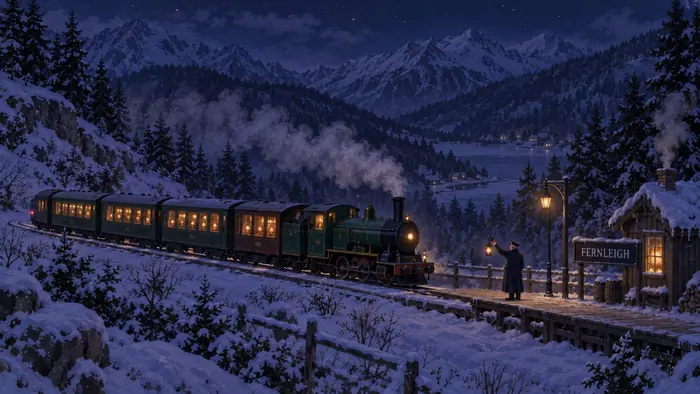
The Night Train Through the Snow
A small, slow steam train climbs all night through snowy mountain forests, and the conductor turns the lamps down carriage by carriage as the passengers fall asleep.
-
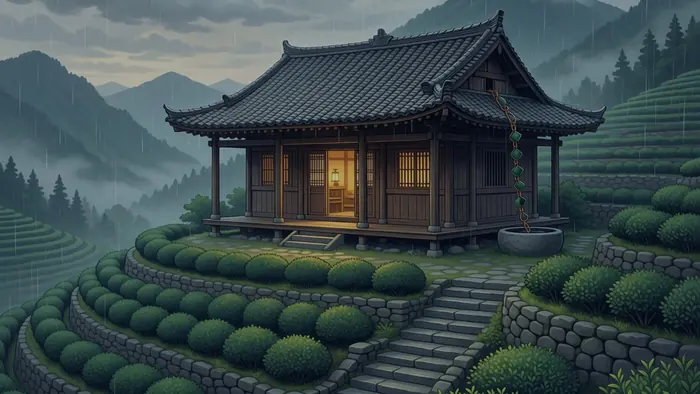 The Tea House in the Rain
High on a mountain in the rainy season, a woman washes the cups, checks each tea tin and watches the clouds come down the copper rain chain.
-
 The Observatory on Mallow Hill
Hazel opens the dome above a sleeping village, shares soup and Saturn with the baker’s grandson, and closes up as the first snow drifts in.
-
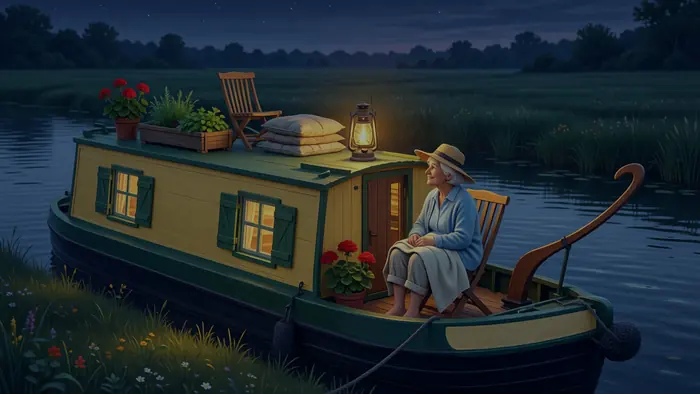 The Houseboat on the Slow River
Down a wide, slow river, gently through an old lock, past meadows and a mill, to moor beneath an oak while glow-worms light the bank.
-
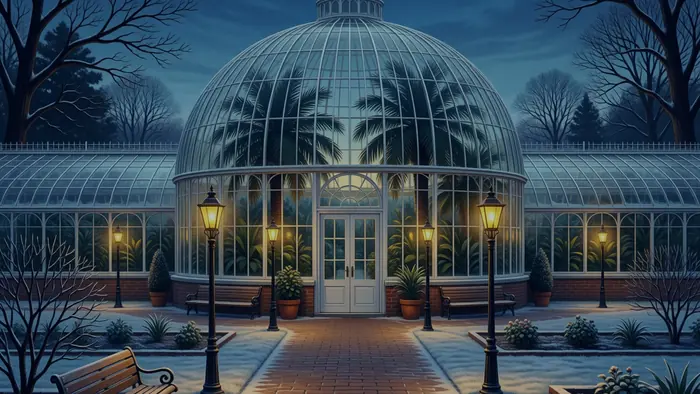 The Winter Glasshouse
Watering bench by bench, banking the boiler, counting the sleeping plants, while snow falls on the glass overhead and turns, late on, to soft rain.
-
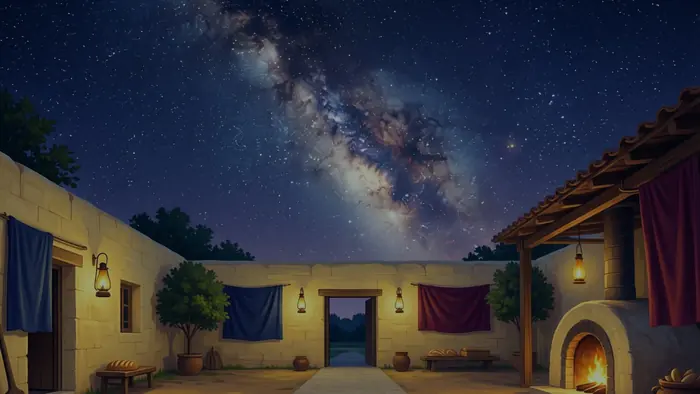 The Caravanserai on the Salt Road
The keeper fills his twelve lamps and bakes bread for whoever the road brings, and everyone carries a mattress up to a roof still warm from the sun.